
A child who cries at school drop-off, follows you from room to room, or worries when you leave can stir up a lot in a parent. You may feel torn between wanting to comfort them and knowing they need to get through the separation. You may also wonder whether you have been too soft, too rushed, or somehow caused the fear. Most of the time, that question is not helpful. The more useful question is: What does my child need from me while they learn that a separation can be hard and still be safe?
Separation anxiety can show up during ordinary developmental stages and during stressful seasons. A new classroom, childcare change, move, illness, family conflict, parent travel, or change in routine can make a previously manageable goodbye feel much bigger. The goal is not to make every goodbye perfectly smooth. It is to help your child build confidence through clear, repeatable experiences of being cared for, coping with the transition, and reconnecting with you afterward.
This guide offers practical ways to help a child with separation anxiety at home, at school, and with other trusted caregivers. It is not a way to diagnose your child. If their fear is intense, persistent, or getting in the way of daily life, a pediatrician or licensed mental health professional can help you look at the full picture.
Start by separating normal worry from a bigger pattern
Many children have periods of wanting a parent close. Young children are still learning that a parent can leave and return. Older children may become more clingy after a scary event, a school break, a move, or a change at home. Tears at the door do not automatically mean something is wrong. A child can be upset at goodbye and still settle, play, learn, and reconnect with a caregiver after you leave.
It is worth looking more closely when worry keeps growing or starts to limit your child's life. You might notice frequent stomachaches or headaches before school, ongoing sleep struggles, repeated refusal to go to school or activities, intense fear that something bad will happen to you, or a need for constant checking and reassurance. The National Institute of Mental Health notes that anxiety disorders can interfere with everyday activities, schoolwork, and relationships. That does not mean every worried child has an anxiety disorder. It does mean daily impact is a useful reason to ask for support.
Try to notice the pattern instead of judging one hard morning. When does the worry show up? Is it only at a new activity, or whenever you leave? Does your child settle after ten minutes or remain distressed for hours? Is the fear stronger when they are tired, hungry, sick, or facing a new routine? These details can help you respond more calmly and can be useful to share with a teacher, pediatrician, or counselor.
Make the goodbye brief, warm, and predictable
When a child is upset, a parent often wants to stay until the feeling disappears. That instinct comes from love. But a very long goodbye can sometimes teach a child that the moment is dangerous enough to require a long rescue. A steadier routine gives a different message: this is hard, you are safe, and you can do the next part with support.
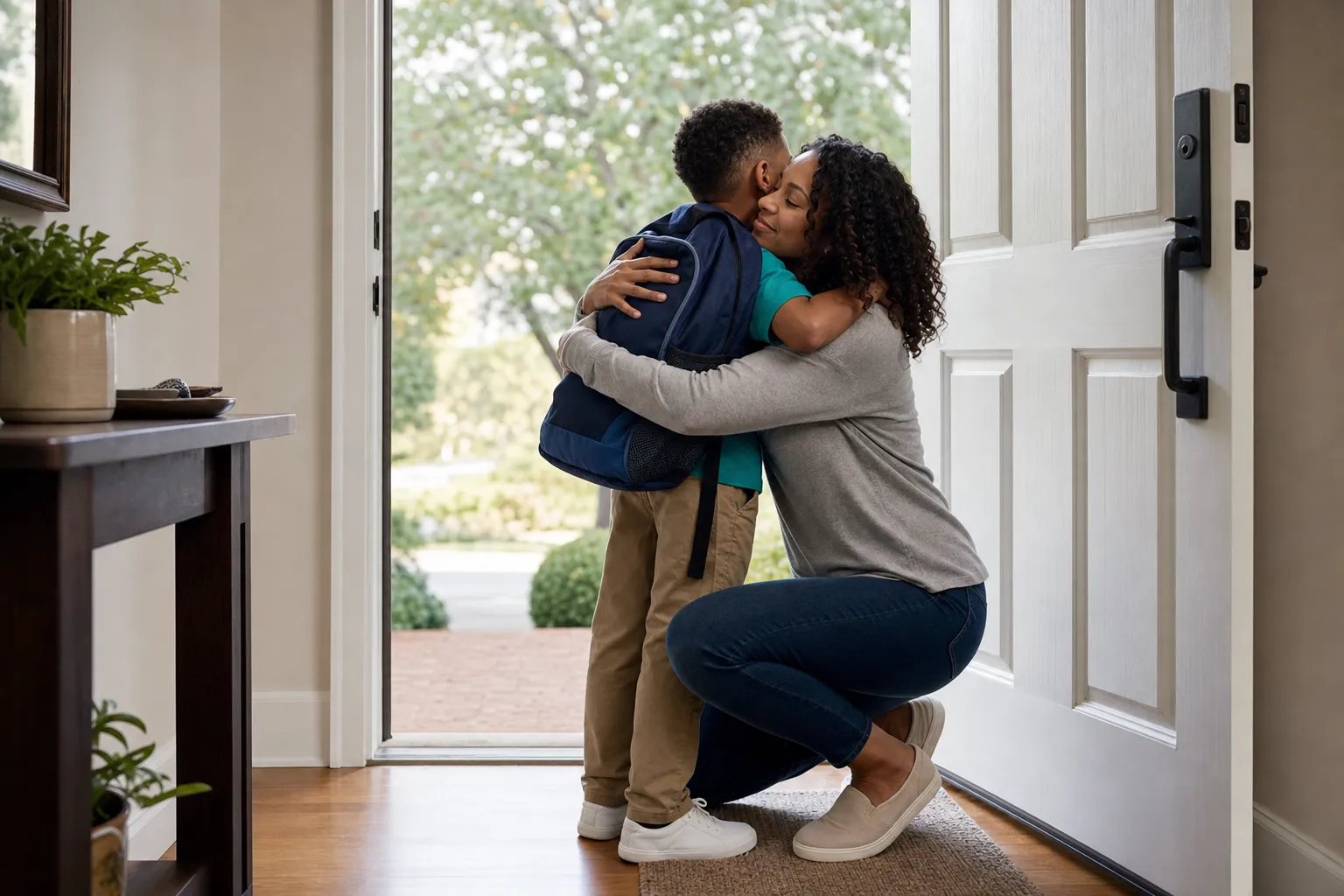
Choose a short ritual you can repeat. It might be a hug, a phrase, a high five, or placing a hand on their shoulder while you say when you will return. Use time your child understands: "I will be back after rest time," "after your afternoon snack," or "after soccer practice." The American Academy of Pediatrics recommends short goodbye rituals, consistency, and keeping promises about return times so children can build trust in the routine. You can find its practical guidance for easing separation anxiety here.
The tone matters as much as the words. You do not need to sound cheerful if your child is crying, but try to sound calm and sure. "You wish I could stay. I love you. Ms. Jordan will help you get started. I will be back after snack." Then leave when you said you would. Avoid disappearing without saying goodbye, returning repeatedly after you have left, or making promises you cannot keep. Consistency is what helps your child learn that the plan is reliable.
Prepare for the separation before emotions are high
The best time to talk about a hard goodbye is often not in the middle of one. At a calm time, walk through what will happen. "Tomorrow we will eat breakfast, get dressed, drive to school, have our hug, and then you will go in with your teacher." Keep the explanation simple and factual. Too many questions or too much reassurance can make the worry feel like a problem everyone needs to solve immediately.
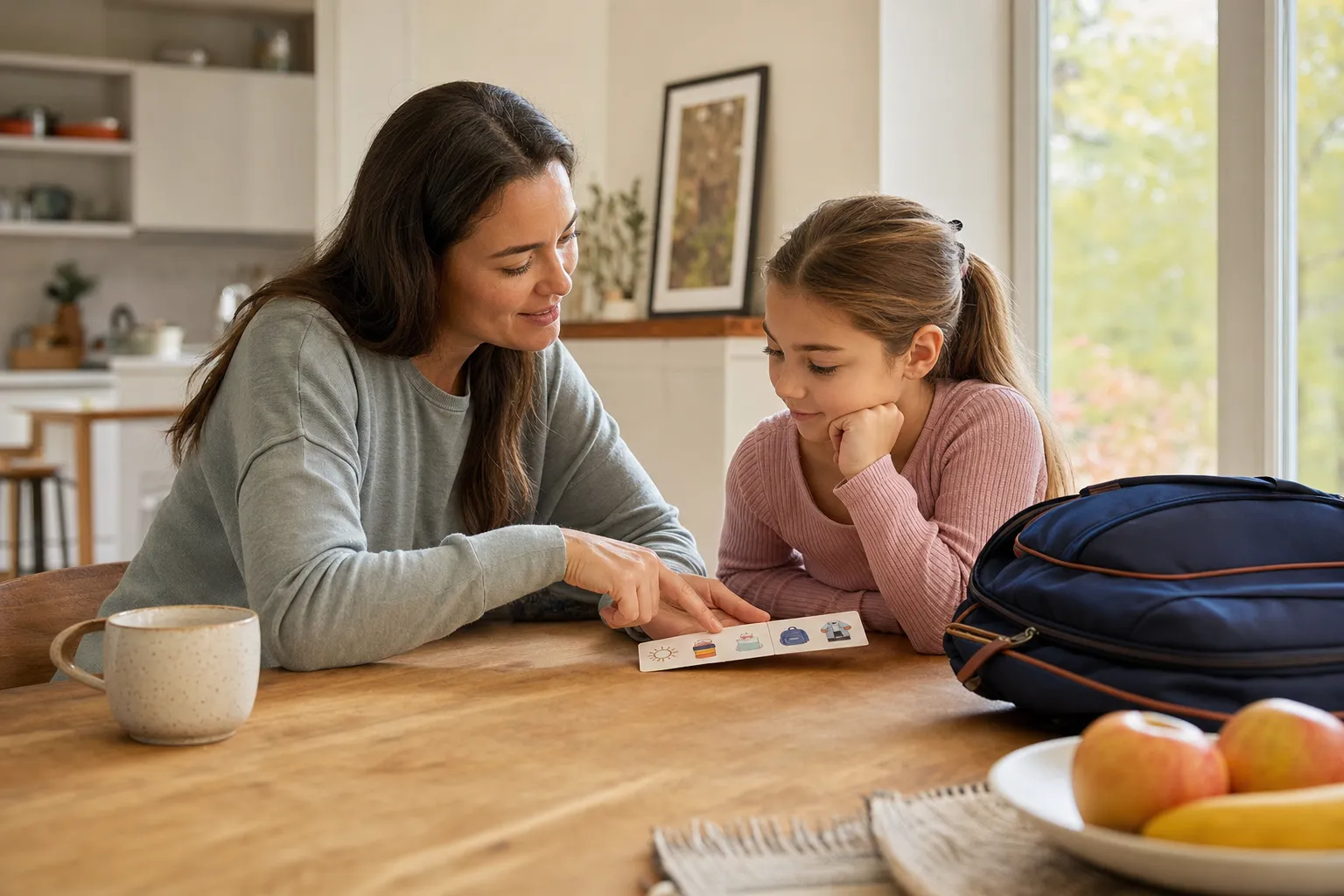
For a young child, a simple picture routine can help: breakfast, shoes, car, hug, school, return. For an older child, it may help to name the part that feels hardest and make a plan for it. They may worry about walking in alone, not knowing who to sit with, or not being able to reach you. A brief practice sentence can give them something usable: "I can tell my teacher I am nervous," or "I can ask to start with a job."
Give your child one small item of connection if it helps, such as a note in a lunchbox, a family photo in a backpack pocket, or a familiar object for a younger child. Keep it simple. The item is a reminder of connection, not a substitute for leaving. You want the routine to communicate, "You can miss me and still do what comes next."
Practice being apart in small, manageable steps
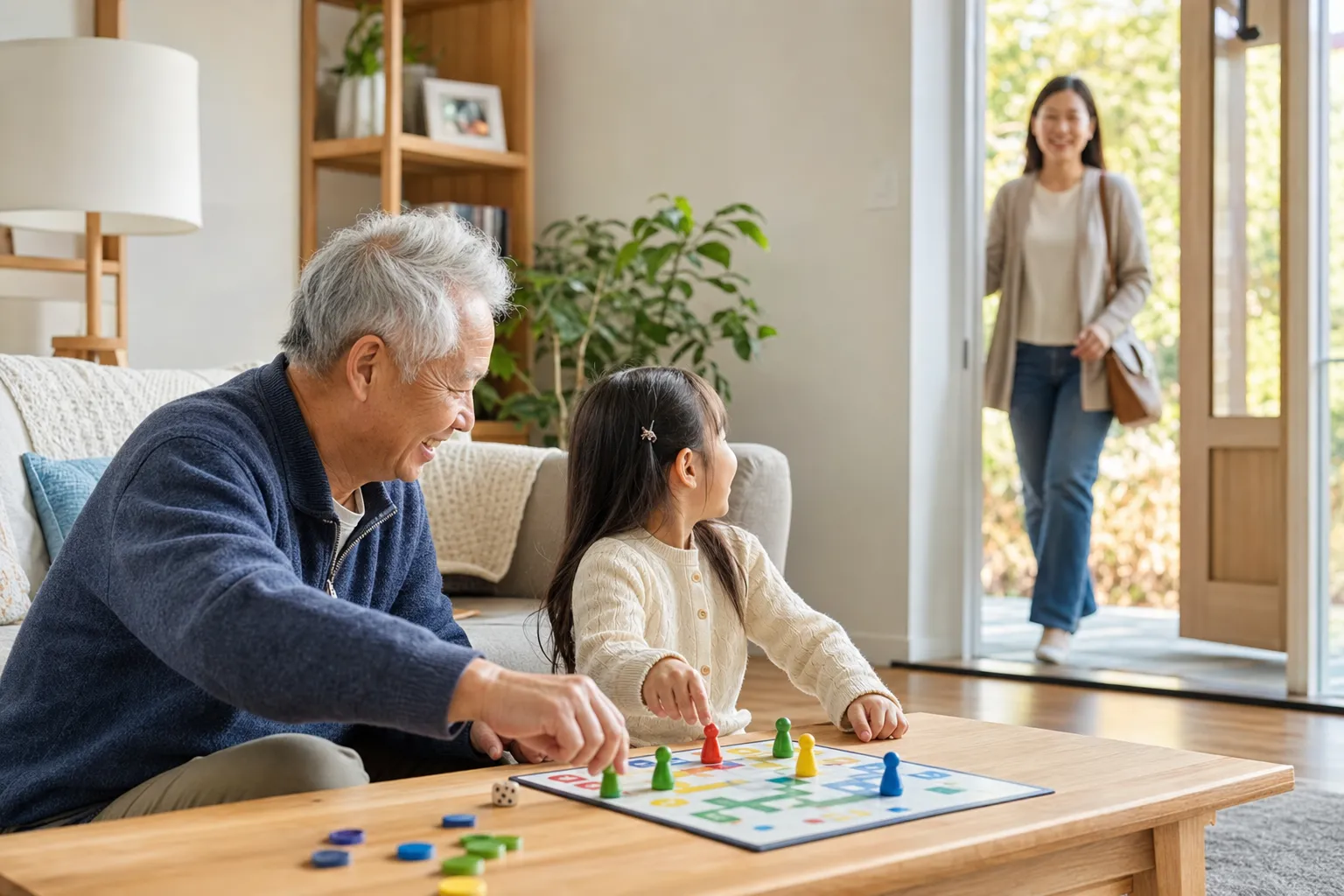
Confidence grows more reliably through practice than through reassurance alone. If your child has been avoiding separations, begin with a step that is challenging but possible. That might mean playing with a trusted grandparent while you take a short walk, staying with a familiar babysitter while you run one errand, or entering an activity with a teacher while you wait nearby for a planned amount of time.
Tell your child the plan ahead of time, then return when you said you would. Afterward, focus less on whether they cried and more on what they handled. "You were worried when I left, and you stayed with Grandpa until I came back." This is different from insisting they were brave or telling them there was nothing to fear. You are helping them notice that they can carry a hard feeling and make it through the moment.
Increase the step gradually when the current one becomes more manageable. The pace matters. Pushing too far too fast can overwhelm a child, while avoiding every separation can make the fear feel more powerful. If you are unsure how much challenge is appropriate, a counselor can help your family build a plan that fits your child's age, temperament, and current stressors.
Validate the feeling without feeding the fear
A child who is anxious needs to feel understood. Dismissing the fear with "You are fine" or "There is nothing to worry about" can leave them feeling alone with it. On the other hand, repeated long reassurance can turn into a cycle where your child needs more and more proof before they can take the next step. The middle ground is simple validation plus a clear plan.
You might say, "You are worried about me leaving. That makes sense. We have our goodbye hug, you will go with Dad, and I will be back after lunch." If they ask the same question again, answer calmly without adding new details: "Yes, I will come back after lunch." You are not trying to talk them out of every feeling. You are showing that feelings can be real without becoming the boss of the routine.
Notice your own nervous system too. Children read our faces, pace, and tone. You do not have to be perfectly calm, especially if a transition is emotional for you too. But before you walk in, take one slow breath, decide what you will say, and avoid signaling that you are unsure whether your child can manage. Your calm confidence can become part of the support they borrow until they have more confidence of their own.
Work with school or caregivers on one shared plan
A child does better when the important adults respond in a similar way. Let the teacher, childcare provider, coach, or family caregiver know what helps your child settle. Keep it brief and practical: the goodbye phrase you use, the item your child carries, the activity that helps them start, and whether you want a short check-in after they have settled. Ask what they see after you leave. Their observations may be reassuring or may show that your child needs more support.
It can help to arrange a predictable handoff. A teacher might meet your child at the door, give them a classroom job, or lead them to a familiar activity. A caregiver might have a favorite book or game ready. The goal is not to create a complicated rescue plan. It is to make the first few minutes after separation feel clear and connected.
If school avoidance is becoming a pattern, start the conversation early. The American Academy of Pediatrics notes that anxious children can struggle to attend school and that a coordinated plan can help families respond with understanding and structure. Its resource on school avoidance offers additional parent guidance. Work with the school and your child's health professionals rather than trying to manage repeated refusals alone.

Support the whole routine, not only the goodbye
A difficult separation often begins long before the door. Rushed mornings, missed sleep, hunger, conflict, or uncertainty can make a child more reactive. Look for one part of the routine that can become more predictable. Packing the backpack the night before, choosing clothes ahead of time, leaving a little earlier, or eating a simple breakfast may not solve the worry, but it can lower the overall pressure.
Build connection at other times of day too. Ten focused minutes of play, reading, drawing, or talking can help a child feel securely connected without making departure the only moment that gets your full attention. The American Academy of Pediatrics includes regular one-on-one time and specific praise among its tips for helping children manage fears and anxiety. Praise effort in a concrete way: "You walked in even though you felt nervous," or "You told me what was hard."
Also make room for ordinary joy. A child should not become a full-time anxiety project. Keep playdates, interests, bedtime stories, outdoor time, and family routines in the picture. The more their world stays full of safe, enjoyable experiences, the more chances they have to remember that worry is only one part of who they are.
When counseling or a pediatric conversation can help
Extra support can be useful when separation fear is staying the same or getting stronger despite steady routines and practice. Reach out when it is regularly disrupting school, sleep, activities, friendships, family life, or your child's ability to be with a trusted adult. It is also wise to ask for help if the worry appeared after a frightening event, major loss, move, illness, family separation, or other significant change.
A pediatrician can help rule out physical concerns and talk through the pattern. Counseling can give a child age-appropriate ways to name worry, practice coping, and build confidence with support from the adults around them. Family sessions can also help parents and caregivers respond in a way that is warm, steady, and consistent. At Wellness Works Counseling Services, care is available for children, teens, adults, couples, and families. You can review the practice's counseling services, read about how play therapy can support children, or request an appointment when your family is ready.
A steadier goodbye is built one repetition at a time
It is hard to watch your child struggle at a goodbye. But their tears do not mean you are failing them, and a hard morning does not erase their progress. The most helpful response is usually not a perfect script. It is a pattern they can trust: you understand that this feels hard, you have a clear plan, they have support where they are going, and you come back when you say you will.
With time, many children learn that they can miss a parent, feel nervous, and still take the next step. If that learning feels out of reach right now, you do not have to figure it out alone. A little support can make a difficult transition feel more manageable for the whole family.
Frequently asked questions
Is separation anxiety normal in children?
Some worry, clinginess, or tears around separation can be a normal part of development, especially during a new routine, school change, move, illness, or stressful family season. What matters most is the pattern over time and how much it affects the child's sleep, school, friendships, activities, and sense of safety.
Should I stay longer when my child is crying at drop-off?
A long goodbye can accidentally make the transition harder for some children. A warmer approach is usually brief, predictable, and confident: connect, say when you will return in words your child understands, say goodbye, and let the trusted adult or teacher help your child move into the next activity.
What should I say to a child who is worried when I leave?
Start by naming the feeling without arguing with it: "You wish I could stay. Goodbyes feel hard today." Then offer one simple, reliable plan: "I will be back after your afternoon snack." Avoid promises you cannot keep, long explanations, or repeated reassurance that turns the worry into a long negotiation.
When should I seek help for my child's separation anxiety?
Consider speaking with your child's pediatrician or a licensed mental health professional when fear is persistent, worsening, or regularly interfering with school, sleep, play, friendships, family routines, or your child's ability to be with a trusted caregiver. Extra support can also help when a major change, loss, trauma, or family stress seems to have made the fear stronger.